
Keeping Your Cool: A 2013 Honda CR-V A/C Rescue Story
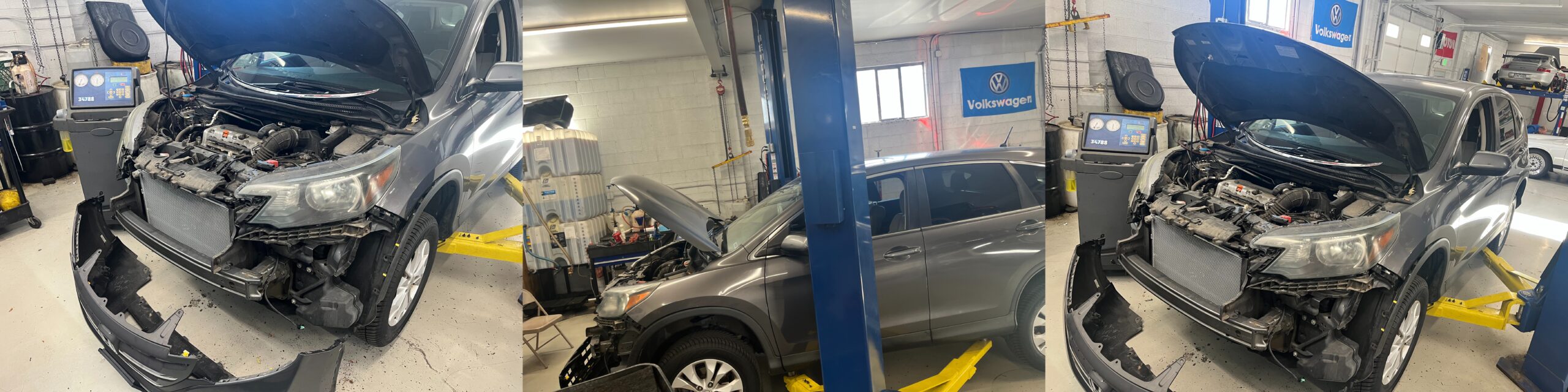
We all know that Denver weather can be unpredictable, but when the sun starts beating down on the asphalt, the last thing you want is a car that blows nothing but hot air. Last week, we had a 2013 Honda CR-V pull into the bay with a classic summertime problem: the A/C was completely on the fritz.
The owner was sweating, and the car wasn’t doing anything to help. Here is how I tracked down the issue and got this CR-V back to ice-cold status.
The Investigation: Where Did the Cold Go?
The first thing I do when a car comes in with A/C trouble is hook it up to our diagnostic machine. After running a quick check, the problem was immediately clear: the system was bone dry. There wasn’t a drop of refrigerant left in the lines.
Think of refrigerant as the “blood” of your A/C system. Without it, the system can’t pull the heat out of the cabin and dump it outside. If you’re out of refrigerant, you definitely have a leak—the question is where?
Hunting for Leaks with UV Dye
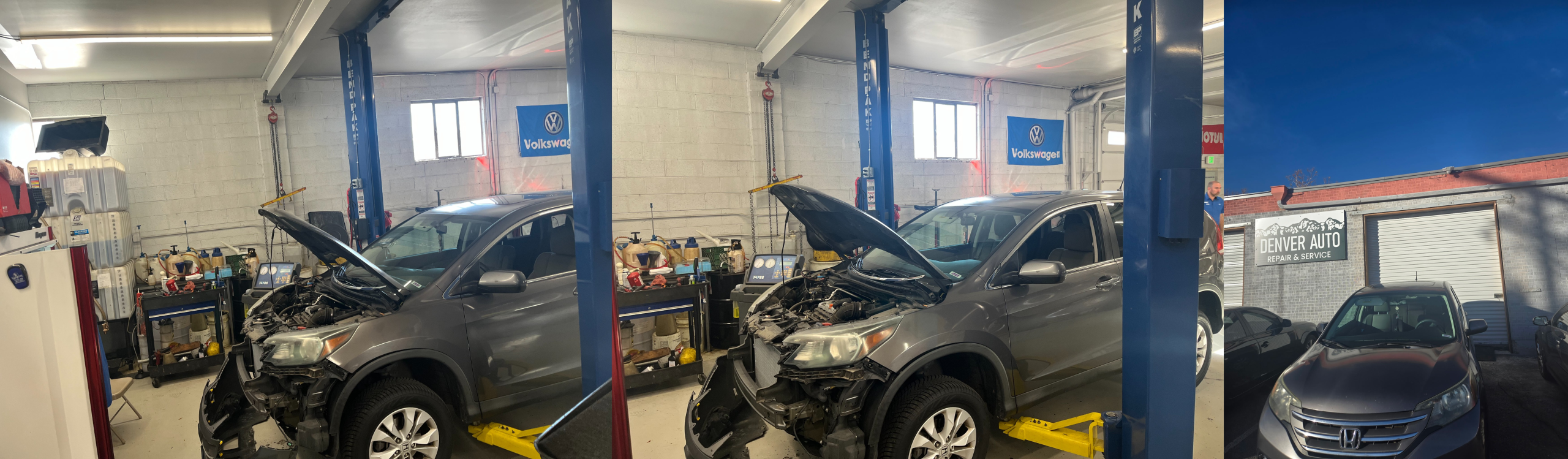
To find the culprit, I performed a fresh charge of refrigerant mixed with a specialized UV dye. This dye is a lifesaver for mechanics. By circulating it through the system and then using a high-intensity UV light, even the smallest pinhole leaks glow like a neon sign.
It didn’t take long to find the “smoking gun.” The A/C condenser—which sits right at the front of the vehicle—had a significant leak. In many SUVs like the CR-V, the condenser is vulnerable to road debris, rocks, or just standard wear and tear over a decade of driving.
The Fix: Condenser Replacement and EVAC
Once we identified the leak, it was time to get to work. I pulled the damaged condenser and performed an EVAC (Evacuation) of the system. This step is crucial because it removes any moisture or air that shouldn’t be in the lines, ensuring that when we put the new parts in, they stay protected.
I installed the brand-new condenser, sealed everything up, and performed a final recharge of the system to the manufacturer’s exact specifications.
Back to “Ice-Cold” Reality
The best part of my job? That first “click” of the A/C compressor and the rush of freezing air coming through the vents after a repair. I ran the CR-V through a series of performance tests to make sure the pressures were holding steady and there were no secondary leaks.
The result? A perfectly functioning A/C system and one very happy Honda owner. Whether you’re headed to the mountains or just commuting through downtown Denver, you shouldn’t have to suffer through the heat.
Is your A/C blowing warm? Bring it by Denver Auto Repair & Service and let me take a look!